light at night heart disease
Sleeping With the Lights On and Your Heart
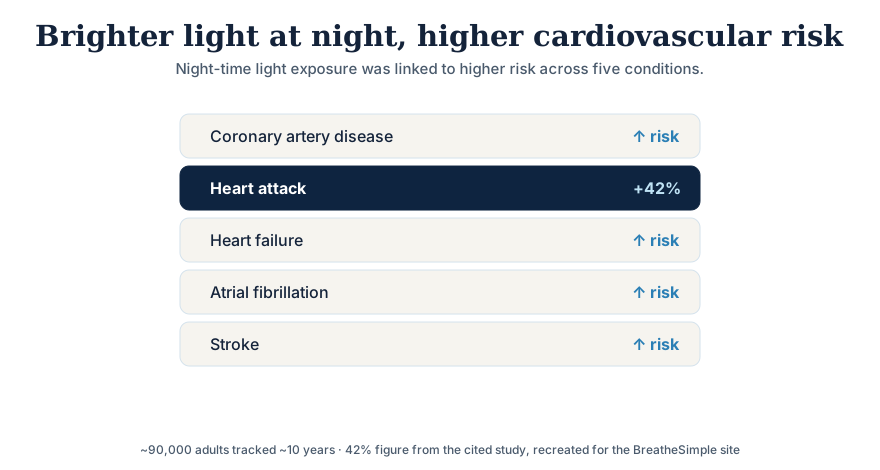
A study of nearly 90,000 adults found that brighter light at night was linked to higher cardiovascular risk—including a 42% higher chance of heart attack.
You probably know that shift work is hard on the heart. A major new study suggests the same underlying culprit—light at the wrong time—may quietly affect the rest of us too, right down to the glow we sleep beside.
Brighter light at night was linked to higher risk across five cardiovascular conditions, including a 42% higher heart-attack risk. Figures from the cited study; recreated chart.
Circadian rhythm and the heart
It is well established that maintaining Circadian rhythms is vital for healthy cardiovascular function. The clearest evidence has long come from shift workers, whose extensive exposure to Circadian disruption correlates with long-term cardiovascular problems.
The open question has been whether this matters for people on more ordinary sleep schedules. A new study suggests it does—and that the relevant exposure may be something as mundane as the light in your bedroom.
What the study measured
A global research team led by Dr. Daniel Windred, PhD, of Flinders University in Australia, recently published a major study on the effects of light—both during the day and, more importantly, at night—on cardiovascular health.
The scale is what gives it weight. The team studied close to 90,000 adults over 40, who had worn wrist-mounted light sensors day and night for nearly ten years. That is a long, real-world record of how much light people actually live in.
Brighter nights, higher risk
The pattern was consistent. Exposure to brighter light at night was associated with higher risks across five classes of cardiovascular danger:
- Coronary artery disease
- Myocardial infarction (heart attack)
- Heart failure
- Atrial fibrillation
- Stroke
Crucially, these associations held independent of established cardiovascular risk factors. And the relationship ran both ways: greater daytime light exposure was associated with reduced risk.
As one example, sleeping with the lights on was linked to a 42% higher risk of heart attack compared with sleeping in darkness. The findings suggest that avoiding light exposure at night may help lower cardiovascular risk—a rare intervention that costs nothing and asks little.
A practical, almost free lever
What we like about this study is how actionable it is. You cannot easily change your genes or your age. You can, fairly easily, make your sleeping environment darker and get more bright light during the day. Blackout curtains, dimmer evenings, and a few minutes of morning sunlight are not heroic measures.
This is the broader systems lesson behind a lot of sleep science: small, repeated inputs—light, breathing, oxygen—compound over years into real effects on the body.
Key takeaways
- Does light at night affect heart health? In this study of nearly 90,000 adults, brighter light at night was associated with higher risk across five cardiovascular conditions, independent of standard risk factors.
- How big was the effect? As one example, sleeping with the lights on was linked to a 42% higher risk of heart attack versus sleeping in darkness.
- What can I do about it? The findings suggest darker nights and brighter days may help. It is a low-cost change worth trying, though no single habit is a guarantee.
Where BreatheSimple fits
Light is one input to a good night. Breathing is another—and it is the one we focus on. Many of the same systems-thinking ideas apply: your nervous system regulates your nights quietly, and small improvements to how it does so can add up.
BreatheSimple is not a medical device and does not diagnose or treat heart disease—the findings above are associations, not medical advice. But if you are already tidying up your sleep environment, it is a good moment to check in on your breathing too. Our free, patented screening produces a Breathing Control Index in a few minutes using your phone. Darken the room, take a breath, and start there.
Full study published in JAMA Network Open (2025).