sleep aids and sleep apnea
34 Million Americans Are Treating a Symptom, Not the Cause
Tens of millions reach for melatonin, Benadryl, or Ambien to sleep — but if the real cause is disordered breathing, none of those substances can help.
A recent US government survey asked Americans what they take to help them sleep. The answer: an estimated 34 million adults — almost 13% — are reaching for something every night. The trouble is the question itself. The survey asked “what are you taking to help you sleep?” rather than “why can’t you sleep?” And those are very different questions.
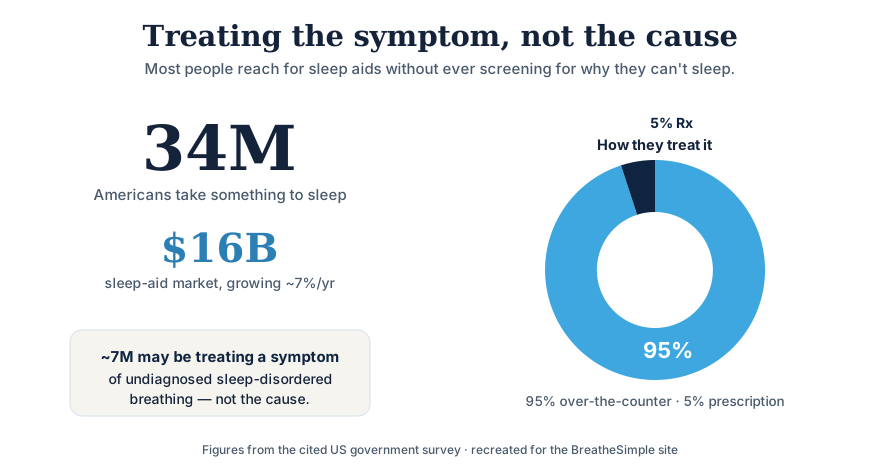
Most of the 34M Americans using sleep aids reach for over-the-counter products — while an estimated 7M may be treating a symptom of undiagnosed sleep-disordered breathing. Figures from the cited survey; recreated chart.
The question nobody asked
The single most common cause of chronic sleep difficulty in adults is sleep-disordered breathing, which affects an estimated 30 million Americans — the majority of whom remain undiagnosed.
Put those two numbers next to each other and a problem comes into focus. A significant fraction of the people reaching for melatonin, Benadryl, Ambien, or cannabis gummies every night have an upper airway problem that none of those substances address.
- Melatonin does not open an airway.
- Cannabis does not stabilize breathing control.
- Ambien does not prevent apneas.
You can sedate yourself to sleep and still stop breathing dozens of times an hour. The pill treats the complaint — “I can’t sleep” — while leaving the mechanism untouched.
A market built on managing symptoms
The survey covered almost 32,000 adults. Of those, only 5% were taking prescription aids; the rest relied on over-the-counter products. Meanwhile the sleep-aid market has reached $16 billion annually and is growing at 7%.
That is a lot of money flowing toward symptom management. It is more profitable to build long-term cash flows by managing persistent symptoms than to identify and fix the underlying cause — and that incentive helps explain why the market keeps growing even as the root problem goes unscreened.
The diagnostic pipeline is broken
The deeper issue is the pathway itself. Picture the standard journey for someone who can’t sleep:
- Try melatonin.
- Try Benadryl.
- Try cannabis.
- Eventually see a doctor.
- Get prescribed Ambien or Trazodone.
- Maybe, years later, get referred for a single-night sleep study.
At no point in that sequence does anyone screen for breathing instability. That is a systems failure, not a personal one.
Run the numbers conservatively. If even 20% of the 34 million people using sleep aids have undiagnosed sleep-disordered breathing — and the epidemiology suggests the real figure is higher — that’s nearly 7 million people taking substances that cannot help them, because the root cause is mechanical or neurological, not chemical. Some may grow dependent on those substances along the way.
Key takeaways
Can sleep aids fix sleep apnea? No. Melatonin, antihistamines, cannabis, and prescription sedatives address the feeling of sleeplessness, not the airway or breathing-control problems that often cause it.
How common is undiagnosed sleep-disordered breathing? An estimated 30 million Americans have sleep-disordered breathing, and the majority are undiagnosed — meaning many people medicating for insomnia may have an unrecognized breathing issue.
What should I do before taking another sleep aid? Consider screening for breathing instability first. If your breathing is the underlying problem, a sleep aid won’t reach it — and you’ll want to talk with a clinician about the right next step.
A shift worth betting on
Here is a prediction: low-cost wearables and smartphone apps will soon be able to identify the underlying causes of disturbed sleep and point people toward the most appropriate remedies. Our team is proud to be part of that shift.
BreatheSimple’s free, patented screening test is one early step in that direction. It is not a medical device and does not diagnose or treat any condition — but it can help you understand your own breathing. So before you reach for another sleep supplement, it’s worth finding out whether your breathing is the real problem.