sleep and heart health
11 Extra Minutes: Sleep as a Cardiovascular Intervention
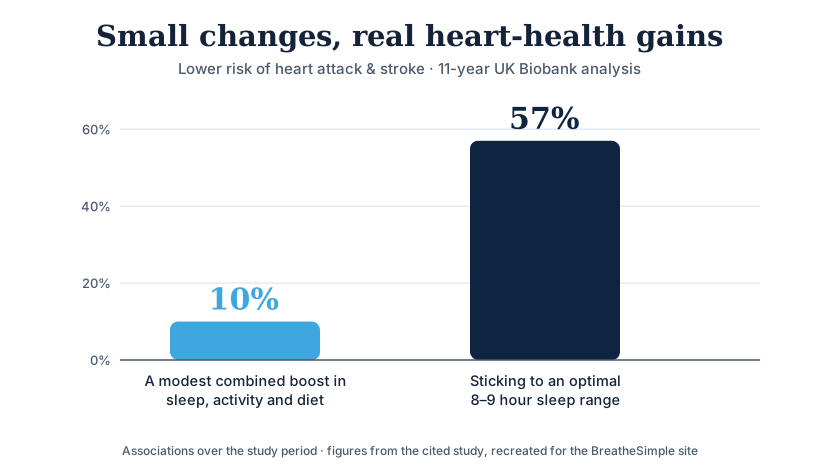
Eleven extra minutes of sleep, a few more minutes of walking, slightly better food: a large study ties modest lifestyle gains to meaningfully lower cardiovascular risk.
Eleven extra minutes of sleep. Apparently that is all it takes to start moving the needle on heart attack risk, according to a new report published recently in the European Journal of Preventive Cardiology. The work is built on a detailed statistical analysis of 11 years of health records for more than 50,000 adults.
A modest combined improvement in sleep, activity and diet was associated with roughly 10% lower cardiovascular risk; an optimal 8–9 hour sleep range with about 57%. Chart recreated as an original BreatheSimple graphic from the cited study.
Three levers, working together
It is well established that three lifestyle components — sleep, exercise, and diet — shape long-term risk of heart failure, myocardial infarction, and stroke. What this study set out to do was quantify how those three factors, in combination, change cardiovascular outcomes over time.
A team led by Professors Ahmadi and Stamatakis at the University of Sydney, Australia drew on 11 years of records from the UK Biobank to find out. Rather than asking people to overhaul their lives, the researchers looked at what happens when the dial moves just slightly on all three fronts at once.
The numbers that matter
The findings are encouraging precisely because the inputs are so modest:
- A small increase in quality sleep, combined with a few more minutes of walking and a slightly better diet, was associated with a 10% lower risk of heart attack and stroke over the study period.
- Sticking to an optimal sleep range of 8–9 hours was tied to a 57% risk reduction.
That second figure is the headline. The amount of sleep you get is not a soft, nice-to-have variable sitting beneath diet and exercise. In this dataset it behaves like a major lever in its own right.
Sleep is not a luxury
The research reinforces what the last decade of sleep science has been quietly insisting: sleep is not a reward you earn after the important work is done. It is a proven cardiovascular intervention, sitting alongside exercise and diet rather than beneath them.
What is striking is how little movement was needed to register a benefit. Eleven minutes is not a lifestyle overhaul. It is one fewer episode before bed, a slightly earlier wind-down, a small act of consistency. The takeaway is permission to start small — and confidence that small still counts.
Where breathing comes in
These results also line up with what our team at BreatheSimple has found in its own work. Certain human phenotypes can improve their sleep through neuroplastic modification of the breathing control centers in the brain — in plain terms, by retraining the part of the nervous system that decides how steadily you breathe through the night.
That matters because, for many people, the obstacle to those extra minutes of quality sleep is not willpower but physiology: an over-reactive breathing control system that keeps nudging them toward wakefulness. Address the control system, and the minutes can follow.
Key takeaways
- Small combined gains add up. A little more sleep, walking, and dietary quality together were linked to a 10% lower heart attack and stroke risk.
- Sleep duration carries real weight. An optimal 8–9 hour range was tied to a 57% risk reduction in this analysis.
- Quality, not just quantity. For some people, better sleep depends on calming an unstable breathing control system — not simply spending more time in bed.
Frequently asked questions
Do I really need to add only 11 minutes? The point is that meaningful benefit showed up alongside modest changes across sleep, walking, and diet together — not that 11 minutes alone is a cure. It is an argument for starting small rather than waiting for a perfect plan.
Why focus on 8–9 hours specifically? That range was tied to the largest risk reduction in this study. Both too little and too much sleep tend to associate with worse outcomes, so the middle band is where the data points.
What if I struggle to get quality sleep no matter what? That is often where physiology, not discipline, is the limiting factor — including how your nervous system regulates breathing overnight.
The bottom line
You do not need a heroic transformation to protect your heart. A few more minutes of sleep, a slightly longer walk, a marginally better plate — done consistently — appear to compound. Sleep has earned its place as a cardiovascular intervention.
If quality sleep is the part that keeps slipping, BreatheSimple offers a place to begin. Our free, patented screening uses your phone’s microphone to produce a Breathing Control Index in minutes, giving you a first read on how your nervous system regulates breathing. BreatheSimple is not a medical device and does not diagnose or treat any condition — but it can help you understand one of the systems standing between you and a better night.